Recommended Search Tool
TruthFinder
★★★★★
TruthFinder gives you instant access to criminal records, court filings, arrest records, address history, and more — pulling from millions of public databases in real time.
Search Public Records on TruthFinder
Sponsored Search — Results from all US public record databases
TruthFinder.com — Affiliate link, commission earned if you subscribe.
TruthFinder.com — Affiliate link, commission earned if you subscribe.

Introduction
Accessing public records in the State of California can be daunting given the sheer size of the state and the number of different state and local government agencies. However, finding the records you need is easier than you may think. Freedom of information is one of the most important aspects of a functioning democracy. The right to privacy is also integral to the principles of liberty and justice in the nation. Therefore, the state of California has in place laws that protect you from unjust access to your personal data such as arrest records. Yet you have a right to access your own personal information. You also have a right to access any public document such as legislative proceedings, as long as release of that information does not jeopardize public safety or public trust. Because there are numerous state and local agencies that keep public records, you need to know who to write to and how. This article will help you locate the public records you need in the state of California.What Are Public Records?
Public records refer to any documents that are created and maintained by taxpayer-funded institutions. Court records, criminal records, and other judicial records that are part of the criminal justice or legal system are public records. Legislative acts and proceedings of local, state, and federal government are also public records. The personal vital records of citizens, such as marriage, birth, death, and divorce records are also public records. Just because something is classified as a public record does not mean that the information is openly available to anyone who asks, however. While government records such as legislation or the proceedings of a government agency are typically protected under freedom of information laws, your personal or private records like your criminal background or vital records are available only to you and a select few others who are entitled by law to see these documents.What Does the Law Say About Public Records?
In the State of California, the Public Records Act guarantees citizens access to public records. The California State Constitution also guarantees freedom of information to all citizens, including the right to access public records. Also known as the Sunshine Act, Proposition 59 in the state of California was passed in 2004. The Sunshine Act promotes the principle of open government in the state of California and guarantees the right of the people to freedom of information.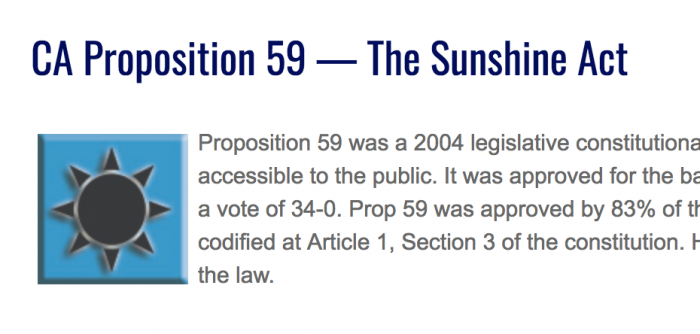
What About Privacy?
As important as freedom of information is in the State of California, your right to privacy is also guaranteed by law. The Public Records Act does include safeguards to protect your personal and private information from falling into the wrong hands. Your personal financial data, employment records, and your criminal history are protected. You can access these types of documents with the proper identification, but unauthorized parties cannot. Labor laws in the State of California also prevent the unauthorized use of background checks, or the unwarranted access of your personal information. See a full list of what is covered under the Public Records Act and what may be exempt.Why Access Public Records in California?
If you are seeking access to your own records, and have identification, then you may not need to provide a reason at all to look up your records. You can perform your own background check and access your criminal history or vital records because it is your right to do so. There are some exceptions to this rule, but generally information that pertains to you will be accessible if you contact the right government agency in the state of California. Similarly, you have the right to access any public records related to government proceedings. However, there are many other reasons why you may need to access public records of all types in the state of California.- If you are doing research for a legal case, journalism, writing a book, or personal curiosity, you may need access to public records such as court or legislative proceedings.
- If you are applying for residency, citizenship, or a visa in a foreign country, you may be required to provide background information. Only you can apply for access to this information, which is why you need to search the appropriate California agency.
- If you are planning to adopt a child in the United States or abroad, chances are you will need to provide access to your background check information.
- If you are applying for a job in the state or federal government, you may be required to submit personal records and a criminal background check.
- Similarly, if you are applying for a job in specific job sectors, like education, childcare, eldercare, or healthcare, you may need to provide access to your criminal history and other records.
- When you apply for professional certification or licensing, you may be required to submit to a background check, too.
- Registering children for a new school.
- Genealogy research
- Disputes over wills
- Getting remarried
Criminal History Records
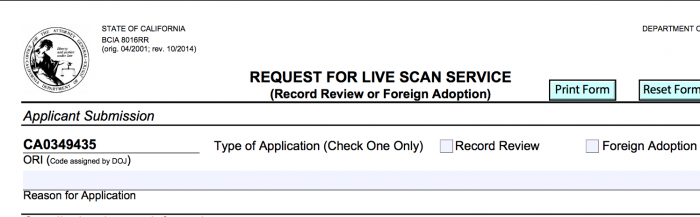
The State of California Department of Justice maintains criminal history records. You may want to access your own criminal history records for a number of reasons, such as verifying the information or empowering yourself with knowledge of your own public record. However, you may also be required to receive criminal history records from the state of California if you are applying for a job with the government, if you are applying for adoption (both domestic and foreign adoption), or if you are applying for visa, temporary residency permits, or similar applications. You can apply for your own criminal history records from the State of California. To do so, you need the following:
Please note the form is different if you live out of state.
Also, if you need your criminal history records from the State of California for any visa or immigration purpose, the process will be different.
See the Department of Justice website for more information on receiving your records for visa purposes.
Fingerprint Live Scan forms are available here.
You can apply for your own criminal history records from the State of California. To do so, you need the following:
Please note the form is different if you live out of state.
Also, if you need your criminal history records from the State of California for any visa or immigration purpose, the process will be different.
See the Department of Justice website for more information on receiving your records for visa purposes.
Fingerprint Live Scan forms are available here.
 Only you can access your own criminal history in the State of California. The only third parties that may be permitted to do a criminal background check would be law enforcement and other eligible government agencies.
Otherwise, your private data is protected.
Only you can access your own criminal history in the State of California. The only third parties that may be permitted to do a criminal background check would be law enforcement and other eligible government agencies.
Otherwise, your private data is protected.
Arrest Records / Police Reports
Whereas criminal records detail prior convictions in the State of California, arrest records and police reports will include police data related to any incident whether charges were filed or not. Arrest records in the State of California may include information like:- Details of the arrest (who, what, where, when, why, and how)
- Official police reports
- Charges Filed
- Charges Dismissed
- Fingerprint history
- Bail Records
- Court Dates including arraignment
- Prosecution information, if any.
Court Records
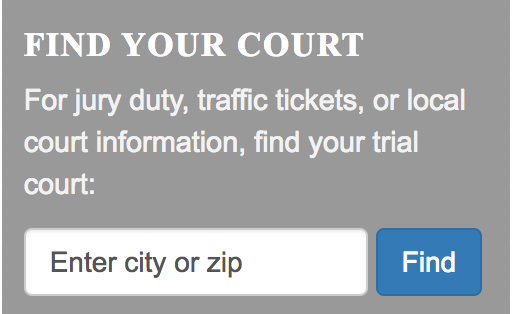
Court records can be complicated to access because you need to know the jurisdiction. Records from cases heard in the state court system will be available through the California Courts, part of the Judicial Branch of California. You can use the California Courts Request Forms for information about trials heard in the following California state courts:
- State appellate or trial courts
- Judicial Council of California
- State Supreme Court
- Divorce records
- Court case records (e.g. opinions, briefs, complaints, filings)
- Traffic tickets and other traffic violations
- Jury service information or assistance
- Probate-related records, including estates, conservatorships, and wills
- Name change records
Prison and Inmate Records
The state of California Department of Corrections & Rehabilitation offers you an inmate locator. If you are searching for a family member or friend who is currently incarcerated in the State of California, you could start by looking here. However, many inmates are held in local or county prisons and jails. In these cases, you would need to contact that county or municipality directly for an inmate search. Generally, it helps to have on hand the inmate’s full name and date of birth as well as the inmate number.Sex Offender Records
California Penal Code Part 1, Title 9, Chapter 5.5 (Penal Code § 290.46) is also known as Megan’s Law. Since it was passed 1996, Megan’s Law mandates a sex offender registry in the State of California. The registry is part of a larger database called The California Sex and Arson Registry. Both local law enforcement and the state Department of Justice are required to notify the public about sex offenders. The law is in place to empower members of the general public with information about sex offenders. You have the right to know whether there is a convicted sex offender in your community or a community you may move to in the future. The registry is public information and you can perform a search by name or address in the State of California.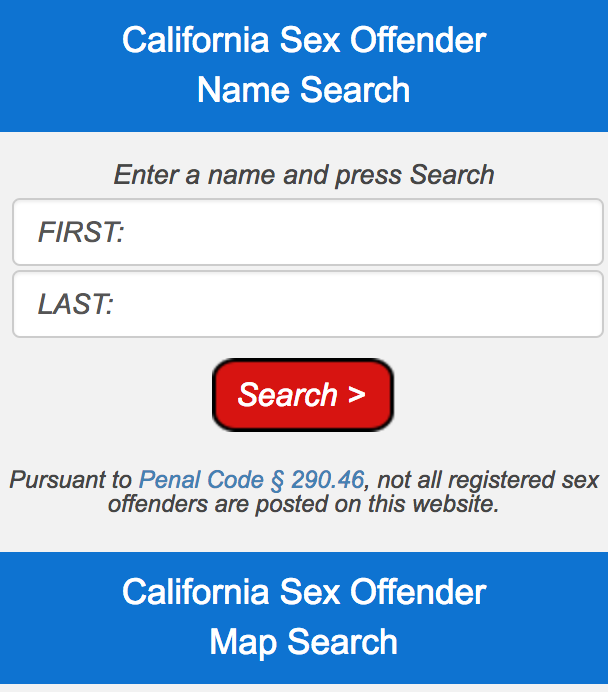
DWI / DUI Records
If you have a prior drunk driving/driving while intoxicated/driving under the influence record in the State of California, it is generally best to search county records. You may conduct a preliminary search by name and city here.Driving Records
Driving records are not considered public information in the state of California, but you have the right to access your own driving records. The California Department of Motor Vehicles manages your driving records if your license is in the State of California. You may want to access your own driver records in the State of California for a number of reasons.
If you are applying for a job in the state of California, your employer may have the right to access your driving records as part of a general background check. This is especially true if your work involves driving commercially.
You do not have to consent to release this information, but refusing consent would likely mean that you are ineligible to apply for the job.
Insurance companies can also access your California driving records. Your driving record may have a bearing on your insurance premiums.
If you are taken to court, especially for a traffic violation, you may also be required to submit your driving records to the court.
The driving record will include information like:
You may want to access your own driver records in the State of California for a number of reasons.
If you are applying for a job in the state of California, your employer may have the right to access your driving records as part of a general background check. This is especially true if your work involves driving commercially.
You do not have to consent to release this information, but refusing consent would likely mean that you are ineligible to apply for the job.
Insurance companies can also access your California driving records. Your driving record may have a bearing on your insurance premiums.
If you are taken to court, especially for a traffic violation, you may also be required to submit your driving records to the court.
The driving record will include information like:
- Traffic violations
- License history
- DUI reports
- Accident history
- Suspensions and revocations of license
- Points on the record
Background Checks in California
In the State of California, employers, professional licensing agencies, and other qualified entities can access some your personal records in the interests of public safety. However, there are exemptions and exceptions. For example, California Civil Code 1786.18(a) prevents any charges from 7 years ago or more from being reported. Similarly, employers can ask about criminal convictions but not about pending charges or dismissed charges. It helps to know your rights if you are applying for a job, to understand when another person can perform a background check and how that information can affect you.Missing Persons Records
Regardless of where in the state of California a person went missing, the state Department of Justice maintains records. This is to better help law enforcement find missing persons, runaways, and anyone who is at risk. You can also search the Department of Justice missing persons databases. If any local jurisdiction filed an official missing persons report, that report must also be sent to the California Department of Justice. The California Department of Justice offers you the opportunity to conduct a detailed search for a missing person. If all you have is the person’s name, you can use a simplified form. Many children go missing in California. Some are taken illegally by a non-custodial parent or other family member. State law requires that all law enforcement departments in California file missing persons reports without a waiting period. Therefore, the Department of Justice in the State of California makes it easier for you to locate a missing person as soon as possible. Schools and other community organizations can also use a missing persons records search to put up signs or solicit information from the general public to aid in the search. The California Department of Justice also maintains a records for unidentified remains. Records can include dental records, physical identification records, and in some cases even DNA.Vital Records
Vital records include birth certificates, name changes, adoption records, marriage certificates, divorce records, and death certificates. All of these vital records are maintained by the California Department of Public Health. You can apply for certified copies of your own vital records, but cannot access records that are not your own. To find a certified copy of birth, death, and marriage records, you use a website called Vital Chek. The California Department of Public Health outsources its database processing to Vital Chek, where you can use an online form to find birth, death, marriage, and divorce records.
Property Records
As in most states, property records are not maintained in a central state database. Instead, property records are maintained by the locality. To find a property record in the state of California, you first need to find out the name of the county in which the property is located and start your search directly from there. You can find a list of all the counties in the State, from where you can access property records.Unclaimed Property
The State of California Controller’s office is in charge of helping people reclaim property that might be theirs. In fact, the California Unclaimed Property Law guarantees you access to unclaimed property that is rightfully yours. Banks and insurance companies, as well as privately-owned companies are required to submit to the State of California’s Controller’s Office any unclaimed property that has not been accessed in three or more years. Examples of unclaimed property include:- Old bank accounts
- Safety deposit boxes
- Insurance benefits
- Stocks, bonds, and other equity
- Uncashed checks
- Unclaimed wages from work
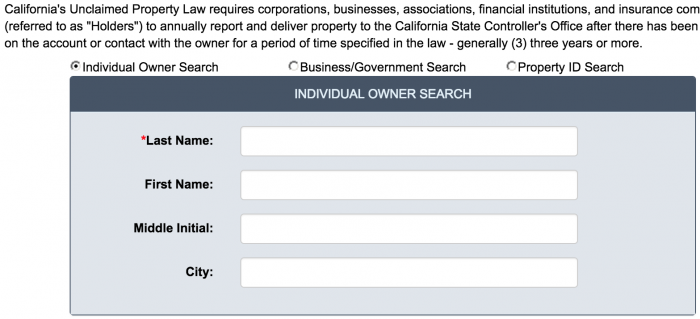 Many people are unaware that they had old bank accounts in their name, or may have stocks and bonds they neglected for years. It can’t hurt to check for unclaimed property in the state of California.
Wills, Estate, Probate Records
In California, there are different procedures for accessing will and probate records. Generally, probate is filed in a county or superior court and not with the California State court system. For example, if the person’s will was filed in the County of Sacramento, you would use that county’s public access system. Wills are public records, but smaller estates (worth less than $150,000) do not need to go through court probate. If the estate involved real estate (such as a house), then you would also need to use different forms. For example, if the real estate was worth less than $150,000 you could use this form. Will and probate issues get even more complicated if the estate was worth more than $150,000, and if there were multiple assets involved. It is recommended to hire an attorney who specializes in will and probate in cases like these.Tips for Accessing Records
Provide as much information as possible (name, case or file number, location) Have the appropriate fees on hand. Some records are available to view for free, but if you need a copy, fees will apply. Typically the fees are nominal, such as ten cents per page. Allow time for processing. For example, the California Department of Justice has at least 10 days to determine whether it will agree to release the records. This does not include the time it takes to locate and copy the record, and then to send that record to you.What Is Exempt from Public Records?
The California Public Records Act does not offer anyone, at any time, for any reason to access any record. After all, the law does try to balance the right to privacy with your right to access public information. Similarly, the government cannot release any records if it would mean releasing trade secrets or any information that would jeopardize public safety or national security. Some records are not considered public at all, and are protected by confidentiality and privacy laws. For example, the following types of records are typically exempt from public access:- Personnel records and employee relations records
- Intelligence and security records from law enforcement
- Criminal investigation records
- Security and banking records
- Pending Litigation
- Test scores and other examination data for licensing or schools
- Preliminary drafts or notes leading up to legislative or other public service activity
- Real estate appraisals prior to the final sale
- Library records
- Homeland security and similar information
- Trade secrets
- Anything protected by attorney-client privilege
Conclusion
Accessing public records is one of your most fundamental rights as a citizen of a democracy. The law protects your right to privacy, while also ensuring government transparency. Whether you are conducting a background check on a potential employee or tenant, or want copies of your own vital records, this website should steer you in the right direction, offering you assistance for finding the public records you need in the State of California.'
Search Public Records